In the Natural World
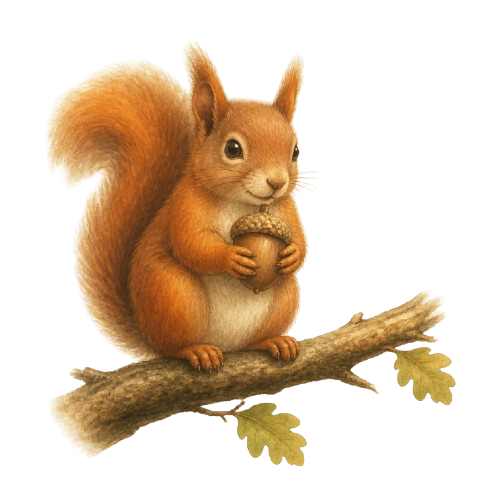
The red squirrel is Britain’s native squirrel. It is smaller and lighter than the introduced grey squirrel, with russet, chestnut or sometimes surprisingly dark fur. Its colouring can change with the season, and its familiar ear tufts are often most noticeable during winter.
Red squirrels spend much of their time high amongst the branches, although they regularly descend to forage. Their varied diet includes seeds, nuts, fungi, buds, flowers and occasionally insects.
Rather than storing everything in one great pantry, they hide food in many small caches beneath leaves, soil and tree roots. Some are retrieved later; others are forgotten, allowing buried seeds to grow.
Red Squirrel in Folklore
Compared with animals such as the fox, hare or raven, the squirrel occupies a quieter place in surviving British folklore. Its quick movements and secret stores nevertheless made it a natural emblem of readiness, thrift and lively intelligence.
In older European stories, squirrels were sometimes viewed as restless woodland messengers, travelling rapidly between branches and carrying news from one place to another. Their habit of gathering food also linked them with prudence: enjoying the abundance of harvest while remembering that leaner days would eventually follow.
Modern affection for Britain’s red squirrel has also been shaped by woodland tales and illustrations. It has become a symbol not only of playfulness, but of the fragile native wildlife that can disappear when familiar habitats and natural balances are lost.
Through the Seasons
Spring
Red squirrels become increasingly active as woodland food returns. You may see them moving between trees, repairing dreys and searching for buds, shoots and remaining stores.
Summer
Dense leaves can make them difficult to spot, although the rustle of branches or falling pieces of cone may reveal their presence before the squirrel itself appears.
Autumn
This is the season of gathering. Nuts, seeds and cones are carried away and hidden in many small places. Autumn shows the red squirrel at its most familiar: busy, bright and preparing without surrendering its playful curiosity.
Winter
They remain active throughout winter, emerging to retrieve food when conditions allow. Their coats are often fuller, and their ear tufts may appear longer and more pronounced.
A Woodland Treasure Under Threat
Red squirrels were once widespread across Britain. Today, wild populations survive mainly in Scotland and in scattered strongholds across northern England, Wales and a small number of island and conservation areas.
Conservation groups monitor populations, protect suitable woodland, report disease outbreaks and work to keep important red-squirrel areas connected. Their survival depends not on one dramatic act, but on many careful actions carried out across the landscape.
A Gentle Reflection
Red Squirrel prepares for winter, but does not spend every moment worrying about it. Between gathering and hiding its stores, it still leaps, explores and pauses to watch the woodland around it.
What small thing could you put aside for another day — without forgetting to enjoy this one?
England Red Squirrel Recovery Strategy · Red Squirrels Northern England · Squirrelpox information · The Wildlife Trusts