In the Natural World
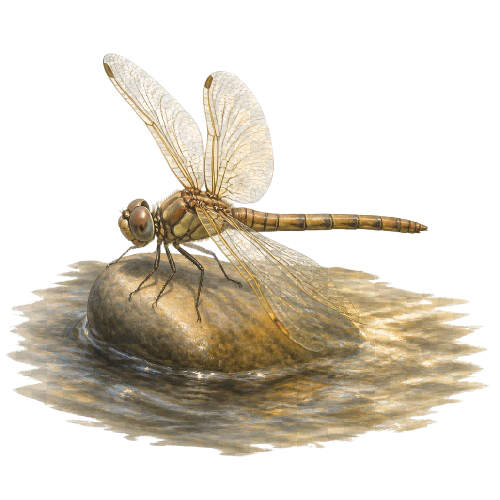
Dragonflies are insects of water, warmth and open air. Although the adults are the part most often noticed, the greater part of a dragonfly’s life is spent underwater as a nymph, developing amongst pond plants, submerged stems and still or slow-moving water.
After months or sometimes several years below the surface, the nymph climbs out of the water, its skin splits and the winged adult emerges. Once its wings have opened and dried, it takes to the air. Adult dragonflies are strong fliers and active predators, feeding on other insects such as flies and midges.
Their large compound eyes give them excellent vision, and their bodies are built for speed and control. Around ponds, lakes, ditches, marshes and slow rivers, a dragonfly may patrol the same stretch of water again and again, flying with dazzling precision.
Dragonfly in Folklore
In Britain, dragonflies do not occupy as large a place in surviving folklore as birds, foxes or bees, yet they have long inspired wonder. Their ability to rise from water and move into the air has naturally linked them with transformation, light, illusion and the meeting of different worlds.
Their shining wings and sudden, darting flight often make them seem almost unreal, as though they have appeared from another layer of the landscape. In later spiritual and symbolic traditions, the dragonfly became associated with change, perception and the brief, luminous moments that catch us off guard and ask us to pay attention.
There is also something old about them. Dragonflies belong to a very ancient line of insects, and their presence at a pond can make a place feel mature, settled and quietly alive. Where they fly, there is usually more happening than first meets the eye.
If Butterfly is often a symbol of soft transformation, Dragonfly has a different feel: quicker, clearer, more flashing than drifting. Its changes begin in the deep water and end in sunlight.
Through the Seasons
Spring
By spring, underwater nymphs are growing and feeding amongst pond plants and mud. In warmer parts of the season, some species begin to emerge, climbing stems or reeds to shed their final skin.
Summer
This is the season when dragonflies are most often seen. Adults fly, feed, patrol territories, mate and lay eggs. Sunny days around ponds, canals and marshes can suddenly feel full of movement and flashes of metallic colour.
Autumn
Some species remain on the wing well into early autumn, especially in milder weather. Eggs and nymphs continue the quieter, hidden part of the cycle in the water even after the bright adult days begin to fade.
Winter
The adult dragonflies have gone, but life continues beneath the surface. Nymphs remain in the pond or wetland, waiting through the colder months until warmth and light return.
Ponds, Wetlands and Clean Water
Dragonflies depend on healthy freshwater habitats. A pond may look small on the map, but for dragonflies it can be an entire world: a nursery, a hunting ground and a place of emergence. When ponds, marshes and ditches are filled in, polluted or cut off from wider habitat, dragonflies lose the conditions they need.
Creating or caring for a pond, leaving some emergent plants in place, avoiding pollution and valuing wetter corners of the land can all help make space for dragonflies and the wider world of pond life.
A Gentle Reflection
Dragonfly begins in water and ends in air. What looks sudden to us has often taken a long time in the dark, quiet world beneath the surface. Not all change is visible while it is happening.
What part of you may already be changing in hidden waters — preparing to rise when the right moment comes?
British Dragonfly Society · Dragonflies and damselflies · Habitat management