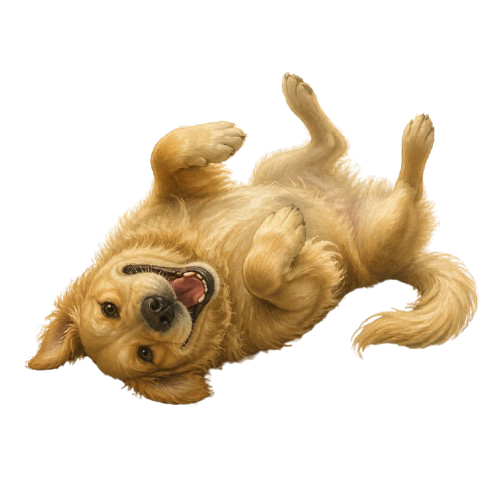
In the Natural World
The domestic dog has lived alongside people for thousands of years, developing from its wolf ancestry into an astonishing range of breeds, sizes and temperaments. Yet beneath all those differences, the dog remains a social, intelligent animal with strong senses and a remarkable ability to form bonds.
Dogs read the world through scent, movement, sound and habit. Their noses are far keener than our own, and much of what a dog understands about a place or a person comes through smell. They are often highly tuned to routine, body language and the emotional tone of the household around them.
Though many dogs now live as household companions, they still carry instincts for play, exploration, guarding, following, searching and cooperative life. Whether trotting a woodland track, dozing by the fire or waiting at the door, a dog so often seems happiest when it has purpose, belonging and connection.
Dog in Folklore
Dogs have long stood for loyalty, protection, guidance, companionship and watchfulness. In folklore they appear as faithful friends, guardians of thresholds, hunting companions and, at times, uncanny beings linked with the night, the crossroads or the world beyond the living.
In everyday household and rural life, the dog was often the creature who accompanied people most closely — on the road, in the field, at the gate and by the hearth. That closeness helped make the dog a powerful symbol of trust and constancy. A good dog kept watch, knew its people and stayed nearby even when words were few.
British folklore also contains darker hound traditions: black dogs on lonely lanes, churchyard guardians and spectral hounds tied to warning, place or memory. These old tales are not the whole story of the dog, but they do show how strongly dogs became linked with boundaries — between home and wildness, company and solitude, this world and the next.
At its gentlest, the meaning of Dog is steadfastness. To walk beside, to warn when needed, to greet with joy and to remain present through ordinary days — these are small things, but not little ones.
Through the Seasons
Spring
Spring often brings renewed energy. Dogs may seem livelier in the lengthening light, keen for longer walks, new scents and fresh grass underfoot. It is a season of movement, muddy paws and the returning pull of the path.
Summer
Warm weather brings outdoor life, though it also calls for care. Summer is a time of shaded rest after walks, cool water, open doors and the happy companionship of a dog lying nearby while the day unfolds.
Autumn
Dogs seem made for autumn in their own way: leaf-strewn paths, damp earth, rich scents and the simple pleasure of returning home after a good walk. It is a season of companionship, steadiness and familiar routine.
Winter
In winter the dog becomes a creature of both weather and hearth. There are brisk walks, steaming breath, wet coats at the door and then the deep contentment of warmth, blankets and sleep close to the household.
Dogs, Welfare and Shared Spaces
Dogs live so closely with us that their wellbeing depends heavily on human choices. Kind care means more than affection alone. It means considering exercise, training, health, safety and the effect a dog may have on the wider world around it.
Good companionship is a two-way bond. When we care well for dogs and guide them kindly, they can share our homes, woods and paths in a way that enriches life for both species.
A Gentle Reflection
Dog walks with trust. It is attentive without always demanding, joyful without embarrassment and steadfast in the small repetitions that make a life feel companioned. Sometimes the old wisdom of Dog is simply to stay close to what you love and keep going.
What would it feel like to be a little more faithful — to your path, your people or your own heart?
Dogs Trust · RSPCA dog advice · The Kennel Club