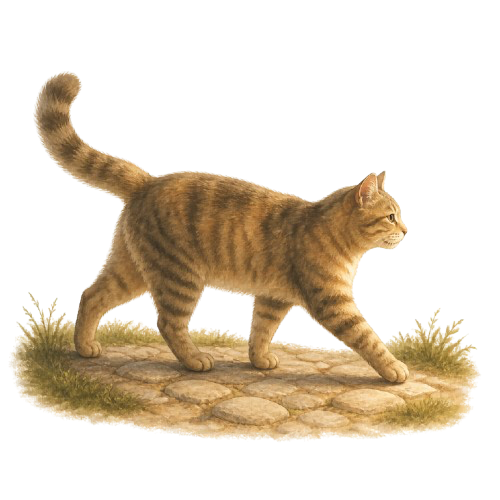
In the Natural World
The domestic cat has lived alongside people for thousands of years, yet it still carries something of the wild in its body and behaviour. Even the most familiar house cat remains a skilled hunter, alert to movement, scent, sound and shifts in its surroundings.
Cats are both social and solitary in their own distinctive way. Many form strong bonds with people and with other animals, while still valuing rest, territory and freedom of choice. They move quietly, conserve energy well and are often most active at dawn and dusk, when small prey is also stirring.
A cat’s whiskers, ears, tail and posture all help it gather information and communicate mood. The cat resting by the fire and the cat stepping lightly through long grass are not two different creatures, but two expressions of the same adaptable nature.
Cat in Folklore
Cats hold a long and complicated place in folklore. They have been linked with independence, feminine mystery, hearth magic, luck, protection and the unseen. In one tale or region they may be welcomed as guardians of the home; in another they appear as uncanny companions, slipping between the ordinary and the enchanted.
In British folklore, the cat is often a creature of thresholds: the kitchen door, the fireside, the barn, the moonlit lane. It belongs to the household and yet never entirely seems to belong to anyone. That sense of self-possession has made cats powerful symbols of autonomy and quiet self-trust.
Cats also became strongly associated with witches in later folklore, especially black cats. This history is tangled with fear, suspicion and superstition, yet it also helped preserve the cat’s reputation as a creature close to intuition, secrecy and the hidden currents of life. A cat watching the room can make it seem as though there is more present than human eyes alone can measure.
At their gentlest, folk meanings around cats suggest discernment: come close when it is right, retreat when needed, keep warm, keep watch and trust your own timing.
Through the Seasons
Spring
Spring brings longer light, fresh scents and more movement in the garden. Cats may become more curious outdoors, following the return of birds, insects and the quickening life of hedges and borders.
Summer
In warm weather, cats often divide their time between shady rest and leisurely patrols. Window ledges, warm paths, sunlit steps and cool indoor corners may all become part of their daily circuit.
Autumn
As the air cools, the pull of the hearth grows stronger. Autumn is a deeply cat-like season: quieter evenings, watchfulness at the window, a return to blankets, baskets and the shared comfort of the home.
Winter
Winter often shows the cat as hearth companion most clearly. Curled close to warmth, conserving energy and emerging when it chooses, the cat seems to understand the wisdom of rest as well as alertness.
Cats, Care and Living Well Together
Domestic cats live close to people, but their lives are still woven into the wider ecology around them. Thoughtful care means not only feeding and sheltering the cat itself, but also considering its impact on local wildlife and its safety in the places it roams.
Living well with cats asks for balance: honouring the cat’s nature, caring for its welfare and being mindful of the other lives that share the same garden, lane or field edge.
A Gentle Reflection
Cat comes near when it chooses and withdraws when it must. It is not careless with its energy, nor ashamed of rest. It keeps its own counsel, but still knows the value of warmth, familiarity and trust.
Where in your life might you honour your own boundaries more gently — while still allowing yourself to belong?
Cats Protection · RSPCA cat advice · The Cat Welfare Group