In the Natural World
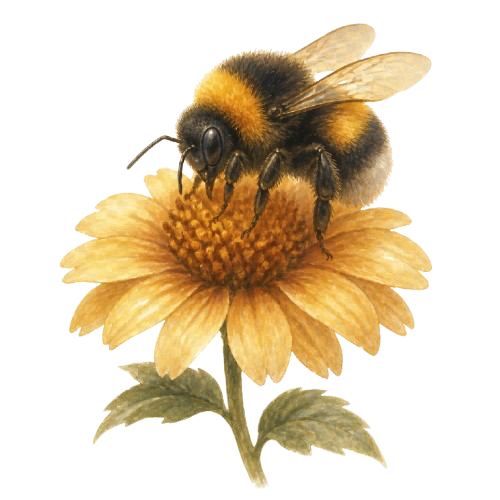
Britain is home to 24 species of bumblebee, from familiar garden visitors to much rarer species with very particular habitat needs. Their thick covering of branched hairs helps trap pollen as they move between flowers.
Most bumblebees live in annual colonies. A queen emerges from hibernation in spring, feeds on nectar and searches for a sheltered nesting place. Depending on the species, this may be underground, amongst long grass, in an old rodent nest, a compost heap, a bird box or another dry cavity.
Once her first daughters become workers, they take over much of the foraging while the queen remains in the nest producing more brood. Bumblebees collect nectar for energy and pollen as a protein-rich food for their developing young.
Bumblebee in Folklore
Bees have long carried associations with industry, community, abundance and the mysterious traffic between the human world and the natural one. Their lives seem small when viewed individually, yet together they help shape the harvest of an entire landscape.
It is worth making one little distinction. Many well-known British bee customs — including the tradition of “telling the bees” about deaths, marriages and other important household news — belong specifically to the keeping of honeybees. They were customs of the hive and should not automatically be attributed to wild bumblebees.
Bumblebees nevertheless fit naturally within the older symbolism of the bee: persistence, fruitful labour and the close relationship between flowers, weather and human survival. Their familiar hum in cottage gardens, orchards and hedgerows makes them one of the clearest signs that the growing season is truly awake.
There is something wonderfully unhurried about their work. A bumblebee may appear to wander from flower to flower, yet every visit has purpose. Pollen is carried, plants are fertilised and future seeds and fruits begin quietly behind it.
Through the Seasons
Spring
One of the first bumblebees you see may be a queen newly emerged from hibernation. She must feed quickly, then search for a safe nest site and begin the demanding work of raising her first brood alone. Early flowers such as willow, dead-nettle, dandelion and fruit blossom can be especially valuable at this time.
Summer
Colonies are at their busiest. Workers travel repeatedly between nest and flowers, carrying pollen and nectar home. Different species favour different flowers, and tongue length helps determine which blooms they can feed from most easily.
Autumn
The old colony begins to come to its natural end. Males and new queens leave the nest, and the young queens feed heavily to build the reserves they will need for winter. Late flowers such as ivy, sedum, scabious and autumn-flowering herbs can provide vital food.
Winter
Most bumblebee activity disappears. Newly mated queens hide away beneath soil, moss, leaf litter, stones or other sheltered places. In milder parts of Britain some species may occasionally remain active, but for most bumblebees winter is a hidden season beneath the surface.
Making Room for Bumblebees
Bumblebees need more than flowers for a few weeks in summer. They need a landscape that offers food from early spring into autumn, places to nest and undisturbed corners where queens can hibernate. The loss and fragmentation of flower-rich habitat is one of the greatest pressures facing them.
A bee-friendly garden does not have to be large or perfectly wild. A pot of nectar-rich flowers, a patch of clover left unmown, a pesticide-free border or a quiet corner allowed to remain untidy can all become part of a much larger network of refuge.
A Gentle Reflection
Bumblebee does not create a meadow in a single flight. It simply visits the next flower, and then the next, carrying a little of one place into another. Much of what it makes possible happens after it has already flown away.
What small thing could you tend today, trusting that its full flowering may come later?
Bumblebee lifecycle · Bumblebee nests · Bumblebee Conservation Trust · Pesticides guidance