The First Loaf
Bread baked from the first grain symbolised the beginning of harvest. The loaf could be shared, blessed or offered in gratitude for the food still growing in the fields.
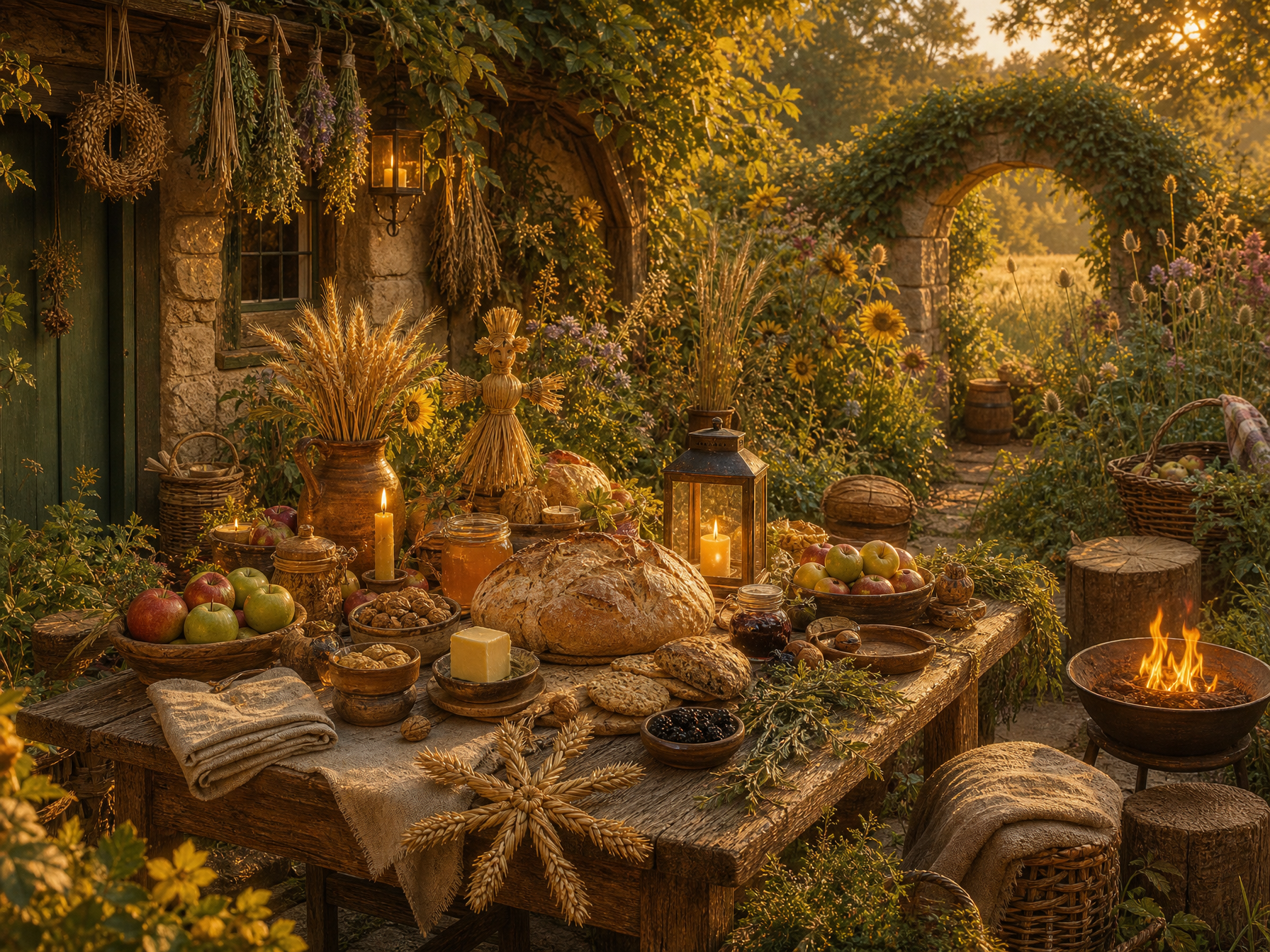
The Cottage kitchen has been warm since morning. Flour dusts the table, grain hangs beside the door and the first loaf rests beneath a folded cloth.
Outside, apples are beginning to colour and blackberries darken along the hedge. The garden still belongs to summer, though something quieter has entered the evening light.
Come and sit for a while. There is bread to break, honey to pass and a place beside the lantern where gratitude need not be grand in order to be sincere.
The first share of the harvest is always offered with care.
Tonight at the Cottage…
The First Harvest
Around 1 August
Lammas arrives while summer is still warm upon the land, but the first signs of turning have begun. Grain stands ripe, seed heads bow beside the paths and the earliest fruits offer a glimpse of the harvest still to come.
The name Lammas is often linked with the Old English “loaf-mass”, a time when bread made from the first grain was brought in blessing and thanksgiving.
The Gaelic festival of Lughnasadh also belongs to this turning of the year. Traditionally associated with gatherings, games, fairs, contracts, hilltops and the beginning of harvest, it marked a season of skill, labour and community.
At the Cottage, Lammas is a celebration of the first return. Not the final abundance of autumn, but the earliest proof that care, work and patience have begun to bear fruit.
A beginning may be worth celebrating even when the work is unfinished. The first loaf matters because it tells us that the field has answered.
Lammas and Lughnasadh customs grew from farming, community gatherings and local tradition. Bread, grain, hilltops, craft, games and the sharing of food appear throughout the season’s stories.
Bread baked from the first grain symbolised the beginning of harvest. The loaf could be shared, blessed or offered in gratitude for the food still growing in the fields.
Seasonal gatherings included games, trade, music, storytelling and the renewing of social and community ties.
Journeys to hills, high places and wells became part of some local observances, bringing together pilgrimage, seasonal gathering and respect for the landscape.
Straw and grain were shaped into small figures, knots and woven decorations. Later customs often called these corn dollies, though their forms and meanings varied.
Place a piece of bread upon a plate beside a few grains, seeds or oats. Think of something you have worked towards, however quietly, and name the first sign that your effort has begun to make a difference.
Break the bread into two pieces. Eat one slowly and place the other outside for birds only if it is plain, suitable and safe, or return a few natural crumbs to compost instead.
“Grain to flour and flour to bread, by patient hand and sunlight fed. For what has grown, my thanks I give; may what I share help others live.”
The Lammas table is sturdy and practical, though no less beautiful for it. Bread sits at its centre, surrounded by honey, butter, oats, herbs, early fruit and jars prepared for the season ahead.
The Cottage Recipe Book rests beside a sheaf of wheat, its Lammas pages marked with a narrow ribbon the colour of toasted grain.
Open the Recipe BookThe Lammas worktable is covered with straw, seed heads, scraps of linen and useful baskets. It carries the comfortable untidiness of hands that have been busy making and preserving.
Lammas honours skill as much as harvest. A repaired object, a baked loaf or something carefully made by hand may be a worthy seasonal offering.
Late summer carries both fullness and change. The hedges are beginning to offer fruit, grasses have turned to seed and the evenings hold a deeper gold than they did at midsummer.
Gather only what is plentiful and permitted. Leave enough fruit, seed and shelter for wildlife, and never cut grain or plants from land without the owner’s permission.
The first harvest is rarely the largest. It may arrive as one finished task, one difficult lesson understood or one small sign that your efforts have taken root.
Do not dismiss the beginning because it is modest. The field does not offer every grain at once, and no life is measured only by its grandest season.
Honour the first proof that you did not labour in vain.
Until the Wheel turns once more.
🌾 🍞 🍎