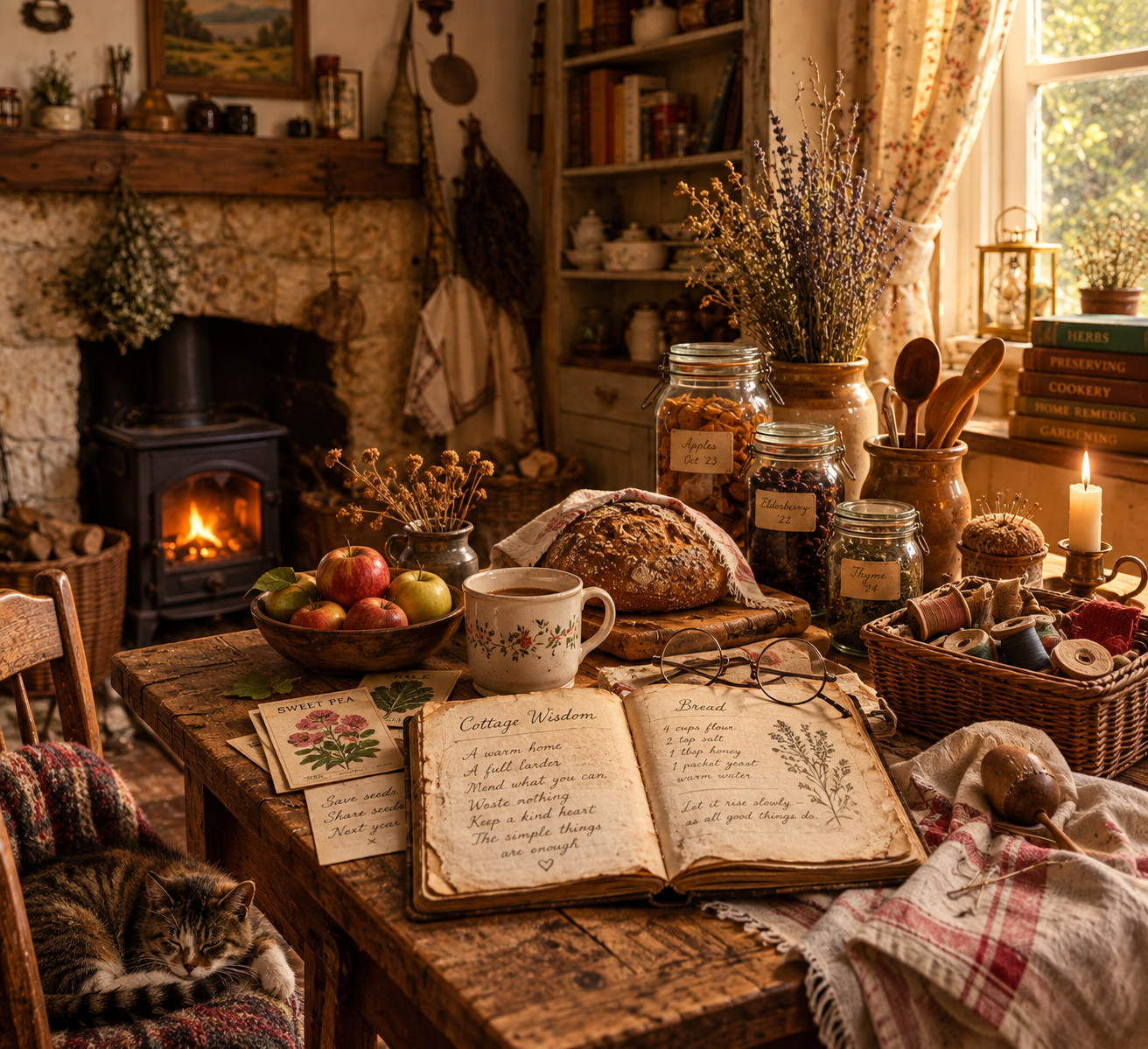
A warm old cottage kitchen with mending, preserving jars, bread, herbs and a handwritten household book

Cottage Wisdom

Little things remembered, useful things kept.

Old habits, practical knowledge and quiet ways of making home feel a little warmer.

There was often a reason Granny did it that way...

Cottage wisdom is not a list of rules. It is made from small habits, old sayings, useful tricks and quiet ways of caring for a home.

Some of these things were once done out of necessity. Some were simply practical. Others stayed because they made life feel calmer, warmer or a little more beautiful.

You may find some of them useful. Others might simply make you smile and think of someone who used to do the same.

Take what speaks to you, adapt what suits your life, and leave the rest.

From the Cottage Cupboard

🧡 Make Do & Mend

There was a time when throwing something away was rarely the first thought.

A loose button was sewn back on. A worn elbow was patched. A cracked handle might be repaired rather than replaced. Old clothes became dusters, quilt pieces, stuffing or rags for the shed.

Not everything can β€” or should β€” be saved, but there is something satisfying about giving a useful thing a little more life.

You might find yourself keeping a small mending basket with thread, spare buttons and needles somewhere easy to reach. Often, the difference between something being repaired and something being forgotten is simply having the tools close at hand.

Sometimes a visible repair becomes part of an object's story.

🍞 Waste Not

Older kitchens were often very good at using what was already there.

Yesterday's vegetables might appear in soup. Stale bread became pudding, breadcrumbs or toast. Jars were washed and kept. Scraps of pastry became little jam tarts.

Modern life gives us more choices, but the old habit of looking twice before throwing something away can still be useful.

A slightly tired carrot may still belong in a stew. A small piece of fabric might become a patch. Brown paper can wrap another parcel.

It does not mean keeping everything β€œjust in case” until the cupboards revolt.

Could this have one more useful life?

πŸ«™ Keep Something By

Many households once kept a little extra tucked away.

A jar of preserves. Spare candles. Flour in the cupboard. A sewing kit. Kindling kept dry. A few tins for days when getting to the shops was difficult.

It was partly practicality and partly reassurance.

You might enjoy creating your own modern version β€” not a great emergency stockpile, just a few useful things that make an awkward day easier.

Perhaps an easy meal in the cupboard, spare batteries, a candle for a power cut, a favourite tea kept unopened, or something simple in the freezer.

There is quiet comfort in knowing the cupboard can look after you for a day.

🏑 Care for the Home

Homes often feel better when they are tended little and often.

Opening a window for fresh air, shaking out a rug, wiping the kitchen table, airing bedding or dealing with a small repair before it becomes a large one can change the feel of a place surprisingly quickly.

You do not need to keep a perfect house.

A lived-in home has shoes by the door, mugs beside chairs, books stacked where somebody actually reads them and projects waiting to be finished.

Care for the home that cares for you.

πŸ‚ Seasonal Habits

Before central heating, supermarkets and electric lighting softened the edges of the seasons, households had to pay much closer attention to the year.

Autumn meant preserving, storing and preparing.

Winter meant warmth, repair and using what had been put by.

Spring brought airing, cleaning, sowing and starting again.

Summer offered long evenings, fresh food and work done outdoors while the light lasted.

We may not need to live by those rhythms now, but noticing them can still feel grounding.

You might change a tablecloth, cook something seasonal, bring in a few fallen leaves, open the windows on the first warm spring day, or light a lamp earlier as autumn draws in.

Small changes help the home move with the year.

β˜• Small Comforts

Some of the best household wisdom is wonderfully ordinary.

Make the tea.

Use the good mug.

Put a blanket where you actually sit.

Warm the plate when dinner has taken ages to cook.

Keep biscuits for visitors β€” even if the visitor turns out to be you.

Light a lamp instead of the big light.

Put flowers in an old jam jar.

Sit down for five minutes before starting the next job.

Comfort does not always need to be earned. Sometimes making life a little nicer is reason enough.

A Little Wisdom to Carry With You

A home does not become comforting because everything in it is new, expensive or perfectly arranged.

It becomes comforting through use.

Through repaired handles, familiar recipes, favourite chairs, jars saved because they might be useful, blankets reached for every winter and little habits repeated until they become traditions.

Perhaps that is the real heart of cottage wisdom:

Use what you have.
Care for what you keep.
Share what you can.
Notice the seasons.
And leave a little room for comfort.
✦ ✦ ✦