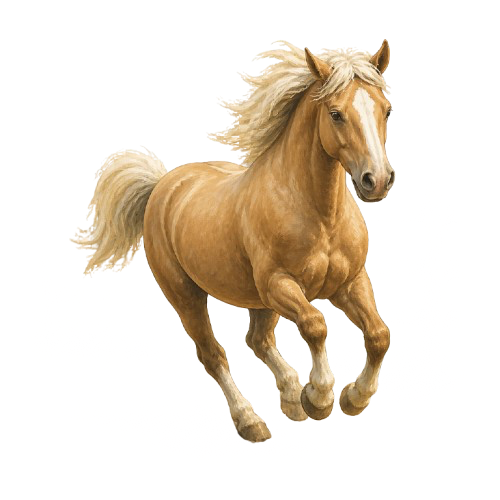
In the Natural World
The domestic horse has lived alongside people for thousands of years, yet it still carries the instincts of a grazing herd animal. Horses are highly social, alert and responsive, reading the world through sight, sound, scent, touch and the behaviour of those around them.
As prey animals, horses are built to notice change quickly and move with speed when needed. Their awareness can seem almost uncanny, but it comes from a long natural history of watching the landscape, reading body language and responding to subtle signals.
Horses thrive on movement, companionship and routine. They graze for much of the day, rest in short periods and communicate through ears, posture, breath, tail movement and the way they hold their bodies. A horse’s calm is rarely emptiness; it is usually attentiveness held in balance.
Horse in Folklore
Few animals have gathered such rich and varied meanings as the horse. Across Britain and far beyond, horses have been linked with freedom, power, journeying, nobility, fertility, the sun, the land and the crossing between worlds.
In British and Celtic tradition, the horse appears in myth and folklore as a creature close to sovereignty, movement and the old spirit of the land. White horses cut into hillsides, tales of fairy horses, water horses and sacred mares all point to an animal that was never viewed as ordinary, even when it was part of daily labour.
The horse has also long symbolised partnership. It is powerful enough to carry, pull and travel great distances, yet that power is best met not by force alone, but by trust, handling and mutual understanding. For this reason, horses often come to represent the meeting of strength and relationship.
At its gentlest, the meaning of Horse is movement with purpose: energy that can run wild if ignored, but that becomes beautiful when guided with respect, rhythm and care.
Through the Seasons
Spring
Spring brings fresh grazing, longer light and renewed energy. Horses may shed heavy winter coats, move more freely in the milder weather and respond keenly to the brightening year around them.
Summer
In summer, horses often divide their time between grazing, resting in shade and moving with the day’s rhythms. Water, fly relief and shelter from strong sun become especially important.
Autumn
Autumn feels naturally horse-like: mist in the field, rich earth, thickening coats and a deepening steadiness. It is a season of preparing for colder weather while still enjoying the clear, open feel of the land.
Winter
Winter asks for shelter, warmth, forage and careful management. Horses grow denser coats and often stand companionably together against the weather, showing once again how important herd comfort and secure routine can be.
Horse Welfare, Kind Handling and Living Well
Because horses live so closely with human care, their wellbeing depends greatly on the choices people make. A horse may appear large and capable, but good welfare still rests on everyday essentials: suitable forage, companionship, clean water, veterinary and hoof care, safe ground and respectful handling.
Good horse care honours both body and spirit: the need to move, the need to feel safe and the need to be understood as a sensitive, living being rather than simply a tool or ornament.
A Gentle Reflection
Horse carries power, but it does not waste it. It listens, feels, gathers itself and then moves. The old wisdom of Horse is not only about freedom to run, but about knowing what you are carrying, what carries you and where your true path lies.
What strength in you is asking not to be suppressed or scattered — but guided, trusted and given room to move?
World Horse Welfare · Blue Cross horse advice · British Horse Society